Christine Bishop, MD MA(’15) appeared in Wake Forest Magazine article
Christine Bishop, MD MA(’15) appeared in Wake Forest Magazine article “Doing the Right Thing: not as simple as it sounds.” (Spring 2017)

Christine Bishop, MD MA(’15) appeared in Wake Forest Magazine article “Doing the Right Thing: not as simple as it sounds.” (Spring 2017)
Emily Hoppes, MA (’11) and Gretchen Spars McKee, MA (’12) co-presented at the 2016 American Society of Bioethics & Humanities Conference “Will we be forgotten again? An HIV Vaccine and its Implications for Adolescent Girls in Sub-Saharan Africa: Clashing Cultures, Glaring Vulnerability, and Limited Resources“. (10/2016)
Mark Corbett, MD, MA (’16) had a commentary in the Narrative Inquiry in Bioethics Journal on Voluntary Stopping Eating and Drinking (VSED): Death with Diginity or Without? The Journal is co-edited by Dr, Ana Iltis, Director for the Center for Bioethics, Health & Society at Wake Forest University. The subject of this volume of the journal is Patient, Family, and Clinician Experiences with VSED. Here is the full volume. (Summer 2016)
Performed by Spring 2016 Performable Case Studies Class (BIE 727)
 Monday 25 April 7:00-8:00 pm
Room 409, Benson University Center, Wake Forest University
The case concerns the ways in which a person who has been injured by a medical device or a questionable medical intervention can become a means to a lucrative end — “investment” or “claim asset” — due to the growing financial services practice of lending to plaintiffs and plaintiffs’ attorneys in class action litigation.
Whether this is exploitative or empowers plaintiffs with pecuniary resources that would otherwise be out of reach — “leveling the field” — is one of a number of issues that the case study interrogates, through the experience of a medically and legally vulnerable patient.
Refreshments to follow
For further information about the Bioethics Seminar Series, please contact Stephanie Reitz:
<reitzsct@wfu.edu> or 758-4256. Website: http://bioethics.wfu.edu/

Just published book written by our very own John Moskop, PhD,
He is the Professor of Internal Medicine and Wallace and Mona Wu Chair of Biomedical Ethics at the Wake Forest School of Medicine, Winston-Salem, North Carolina. He chairs the Clinical Ethics Committee at Wake Forest Baptist Medical Center and serves on the Ethics Committee of the American College of Emergency Physicians. He is the author of more than one hundred articles and book chapters on a broad range of topics in bioethics.
About the book
Who should have access to assisted reproductive technologies? Which one of many seriously ill patients should be offered the next available transplant organ? When may a surrogate decision maker decide to withdraw life-prolonging measures from an unconscious patient? Questions like these feature prominently in the field of health care ethics and in the education of health care professionals. This book provides a concise introduction to the major concepts, principles and issues in health care ethics, using case studies throughout to illustrate and analyze challenging ethical issues in contemporary health care. Topics range widely, from confidentiality and truthfulness to end-of-life care and research on human subjects. Ethics and Health Care will be a vital resource for students of applied ethics, bioethics, professional ethics, health law and medical sociology, as well as students of medicine, nursing and other health care professions.
For more details please go here.
 JONATHAN KAHN, JD, PhD, James E. Kelley Chair in Tort Law, & Professor of Law, Mitchell Hamline School of Law, St. Paul, Minnesota
Dr. Kahn is a thoughtful and prolific scholar and critical thinker, who specializes in addressing biotechnology’s implications for our ideas of identity, rights, and citizenship, with a particular focus on race and justice. In particular, his work combines law, policy, biology, and bioethics to address the challenges posed by racial categorizations and genetic associations in the pharmaceutical industry.
Refreshments to follow
Tuesday 5 April 4:00-5:00 pm
Room 4001, 525@Vine
Winston-Salem NC, 27101 (WFU Downtown Campus)
SUSAN E. LEDERER, PHD
Robert Turrell Professor and Chair, Department of Medical History and Bioethics
University of Wisconsin-Madison
 Dr. Lederer is the Robert Turell Professor of Medical History and Bioethics, and Chair of the Department of Medical History and Bioethics at the University of Wisconsin-Madison. She is spending the spring semester at UNC-Chapel Hill as the 2016
UNC-Duke Nannerl Keohane Distinguished Visiting Professor.
Dr. Lederer is the author of numerous important articles and books examining the history of medicine and medical research; medicine and society in twentieth-century America; race, medicine, and public health; medicine and popular culture; research ethics; and the
history of medical ethics. She is currently at work on a biography of Dr. Henry Beecher. Her lecture revisits his classic 1966 article on
research ethics in the New England Journal of Medicine.
Thursday 3 March 4:00-5:00 pm
Z. Smith Reynolds Library Auditorium, Room 404
Reynolda Campus, Wake Forest University
Reception to follow
Policing clinics isn’t the right move; instead, the FDA needs to consider the concerns of key stakeholders.
Ana Iltis, PhD, Wake Forest University & Kirstin Matthews, PhD, Rice University
See the Houston Chronicle, December 15, 2015: View Editorial
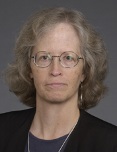
Nancy King, JD, Professor, Department of Social Sciences & Health Policy and Wake Forest Institute for Regenerative Medicine, Wake Forest School of Medicine; Co-Director, Center for Bioethics, Health, & Society and Graduate Program in Bioethics, Wake Forest University, has been appointed by US Dept of Health & Human Services (HHS) Secretary Burwell to the Secretary’s Advisory Committee on Human Research Protections (SACHRP) for a 4-year term beginning 21st October 2015.
The SACHRP provides expert advice and recommendations to the Secretary of HHS on issues and topics pertaining to the protection of human research subjects. The Committee was created in 2001.
To date SACHRP has focused its attention on areas such as research involving children, prisoners, and individuals with impaired decision-making capacity; informed consent and the use of biospecimens; harmonization of human subjects regulations and guidance; the reduction of regulatory burden; the HIPAA Privacy Rule; community-engaged research, and accreditation.
In upcoming meetings, SACHRP will discuss recommendations to HHS about the recently released Notice of Proposed Rulemaking on changes to the federal regulations for human subjects research.
The Wake Forest Law School’s Health Law and Policy Center has issued a report on “enrollment deficits” under the Affordable Care Act, in North Carolina’s rural counties. Prepared with support from the Kate B. Reynolds Charitable Trust, this report focuses on the unenrolled population that is potentially eligible for subsidies through the “marketplace” exchange — in order to better target outreach and enrollment efforts.
Enrollments Deficits under the Affordable Care Act – October 2015 –
Edwin Shoaf, Research Associate and Mark A. Hall, Professor of Law & Public Health, Wake Forest University School of Law.